

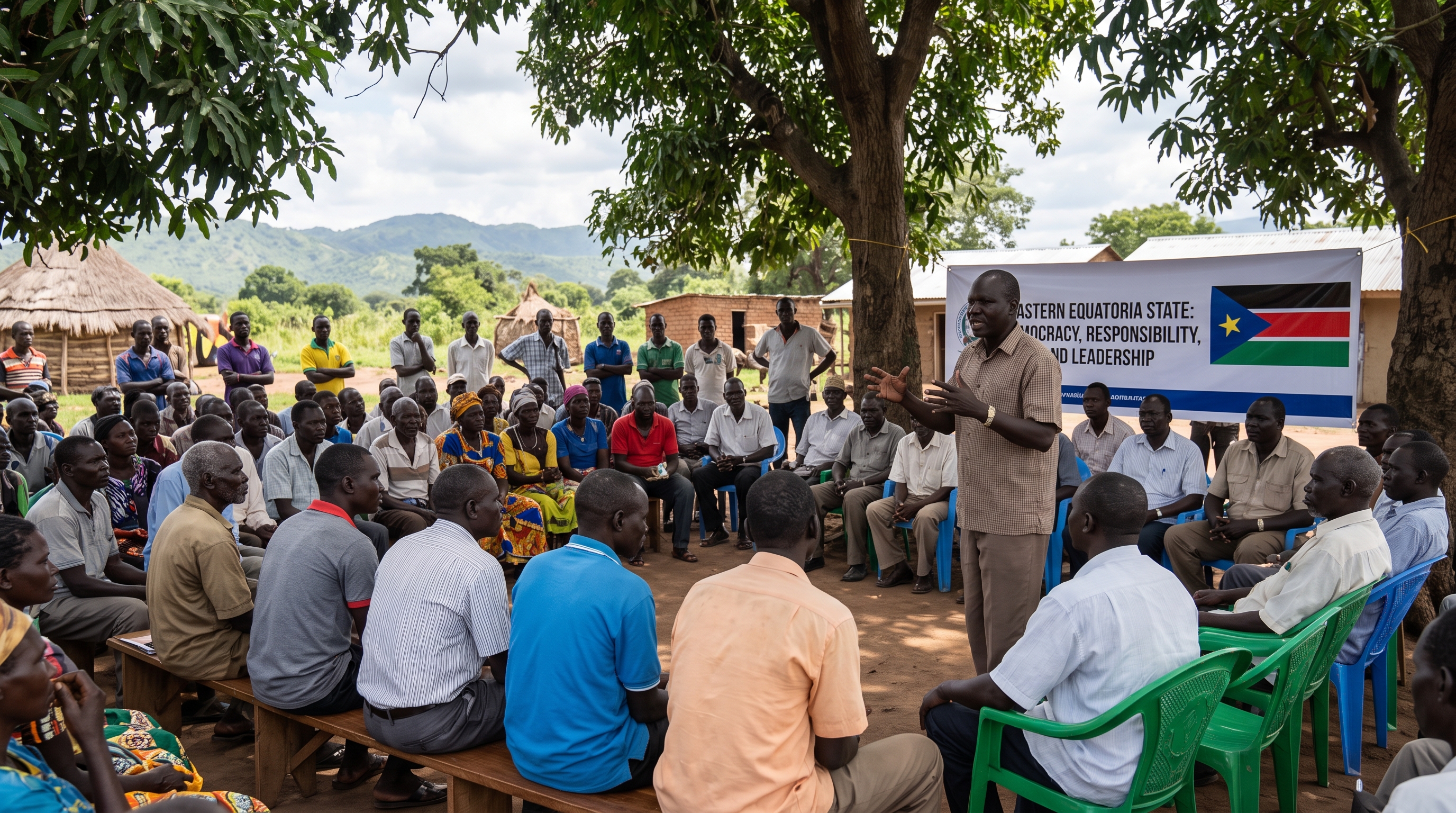
As south sudan approaches the anticipated state elections, distinguishing participation from belief in credibility matters. These are two different political questions. Responsible leaders must be prepared to address both.
Our position on the forthcoming elections is clear. We have serious concerns about the preparedness and credibility of the electoral process. The absence of a completed national census, incomplete voter registration, the shrinking electoral timeline, and the lack of adequate security arrangements raise fundamental questions about whether the necessary conditions for credible, transparent, and peaceful elections are being established.
These are not merely administrative shortcomings. They are political and institutional challenges that directly affect public confidence, electoral legitimacy, and the ability of citizens to exercise their democratic rights meaningfully.
Moreover, it requires transparent procedures, an inclusive electoral environment, adequate security, effective institutions, and public confidence that every eligible citizen has a fair opportunity to participate. Without these safeguards, the electoral process risks becoming a contest for political office without sufficiently addressing the conditions necessary for democratic legitimacy.
Nevertheless, our concerns about the electoral environment should not be interpreted as discouragement of political participation.
Additionally, we recognize those willing to take political risks and compete for leadership and engage with the system.
Their participation can help sustain political engagement and keep democratic aspirations alive.
However, participation must go hand in hand with continued demands for transparency, institutional accountability, and electoral credibility.
THE TEST OF DEMOCRACY BEGINS WITHIN POLITICAL PARTIES
In Eastern Equatoria State, four aspirants from the same political party are preparing to compete in the party primaries for the governorship. This presents an important opportunity to demonstrate that democratic principles can be practiced within political institutions before they are demanded at the national level.
My message to all four aspirants is straightforward: The party primaries are not simply a competition to determine who becomes the candidate; they are a test of political maturity, democratic discipline, and readiness to lead.
If a political party cannot manage competition among its own aspirants transparently and peacefully, it will struggle to convince the public that it can promote democratic governance at the state or national level.
The primaries should therefore be conducted in a manner that guarantees fairness, respects the established rules, and allows the legitimate will of party members to prevail. No aspirant should seek victory through intimidation, manipulation, personal attacks, or the deliberate creation of divisions.
Equally, the successful candidate must understand that winning a primary does not confer ownership of the party, its supporters, or the people of Eastern Equatoria. It confers a responsibility to unite people, earn public trust, and demonstrate the capacity to lead beyond personal and factional interests.
LOSING A PRIMARY SHOULD NOT MEAN LOSING YOUR POLITICAL PRINCIPLES
To those who may not emerge victorious, I offer an equally important message: accepting defeat is not a sign of political weakness. It is evidence of maturity, confidence, and respect for democratic principles.
If your fellow contestant wins through a credible and transparent process, have the courage to congratulate them and extend a hand of cooperation. Your political ambitions should never become more important than the stability and future of your state.
However, accepting the outcome must not mean remaining silent in the face of genuine irregularities. Where there is credible evidence of manipulation or violations of established procedures, contestants should pursue lawful and peaceful mechanisms for resolving their grievances.
Democratic maturity requires both the willingness to accept a legitimate outcome and the courage to challenge an illegitimate one through appropriate channels.
This distinction is essential. Blind acceptance can undermine accountability, while the rejection of every unfavorable outcome can weaken political institutions. Responsible leadership requires the wisdom to distinguish between the two.
EASTERN EQUATORIA NEEDS A NEW POLITICAL CULTURE
Eastern Equatoria State needs leaders who understand that political office is a public responsibility, not a personal entitlement.
Our state needs a political culture founded on institutional respect, peaceful competition, accountability, inclusion, and the ability to work with people who hold different views. Political disagreements should not be allowed to become permanent divisions among communities, supporters, or political colleagues.
The conduct of today’s aspirants will send a message about the kind of political leadership Eastern Equatoria is prepared to offer South Sudan tomorrow.
Those who aspire to lead the state must demonstrate that they can manage disagreement, respect institutions, unite competing interests, and place the public good above personal ambition.
Leadership is not measured solely by the number of supporters one commands or the intensity of one’s political campaign. It is measured by the ability to build trust, respect established procedures, exercise restraint, and serve people beyond one’s political constituency.
The state level should be a foundation for responsible national leadership. If we want stronger democratic institutions in South Sudan, we must begin by demanding democratic conduct from our own political parties and aspiring leaders.
OUR POSITION: PARTICIPATION MUST NOT REPLACE ACCOUNTABILITY
Let there be no misunderstanding about our position. Encouraging political participation does not mean overlooking the weaknesses of the electoral process. Likewise, questioning electoral preparedness does not mean abandoning the democratic aspirations of our people.
Both positions can coexist.
We can encourage aspirants to participate while demanding that the relevant institutions address concerns about the census, voter registration, electoral timelines, and security arrangements. We can support peaceful political competition while insisting that the process must be transparent, inclusive, and credible.
Indeed, the more serious the institutional challenges become, the more important it is for political leaders to speak responsibly, engage constructively, and demand practical solutions rather than exploit public uncertainty for political advantage.
The relevant authorities must provide clarity on outstanding preparations, communicate realistic timelines, and demonstrate how identified obstacles will be addressed. Political parties and contestants, in turn, must commit themselves to peaceful competition, respect for the rules, and the lawful resolution of disputes.
Electoral credibility cannot be created through political declarations alone. Moreover, it must be established through institutions, procedures, and actions that citizens can observe and trust.
MY FINAL MESSAGE TO THE FOUR ASPIRANTS
To all four gubernatorial aspirants in Eastern Equatoria State, I wish you the very best as you prepare for your party primaries.
Compete with determination, but do not lose your principles. Campaign with confidence, but do not undermine your fellow contestants. Seek victory, but remember that the people you hope to lead are more important than the office you seek.
If you win, demonstrate humility and a willingness to unite the party. If you lose, demonstrate maturity and respect for a credible outcome. If the process is compromised, seek justice through the appropriate procedures.
Above all, let your conduct demonstrate that Eastern Equatoria can produce leaders who understand democracy not merely as a route to power, but as a system of responsibility, accountability, and service.
The future governor of Eastern Equatoria State will need more than political ambition. The state will need a leader capable of restoring public confidence, strengthening institutions, promoting peace, and serving all its people fairly.
Our concerns about electoral credibility remain, but we will continue to encourage responsible political participation, transparency, and democratic leadership.
May the primaries be peaceful, transparent, and credible. May the successful candidate emerge through a process that commands respect. And may all four aspirants remember that their greatest contribution to Eastern Equatoria may not be winning the contest, but demonstrating how a democratic contest should be conducted.
The ultimate measure of political success is not simply who wins the office, but whether the process strengthens democracy and whether the leadership that emerges serves the people with integrity.
I wish all the aspirants the very best. May democracy prevail, political maturity guide the process, and the interests of Eastern Equatoria State remain paramount.
Leave a Reply