

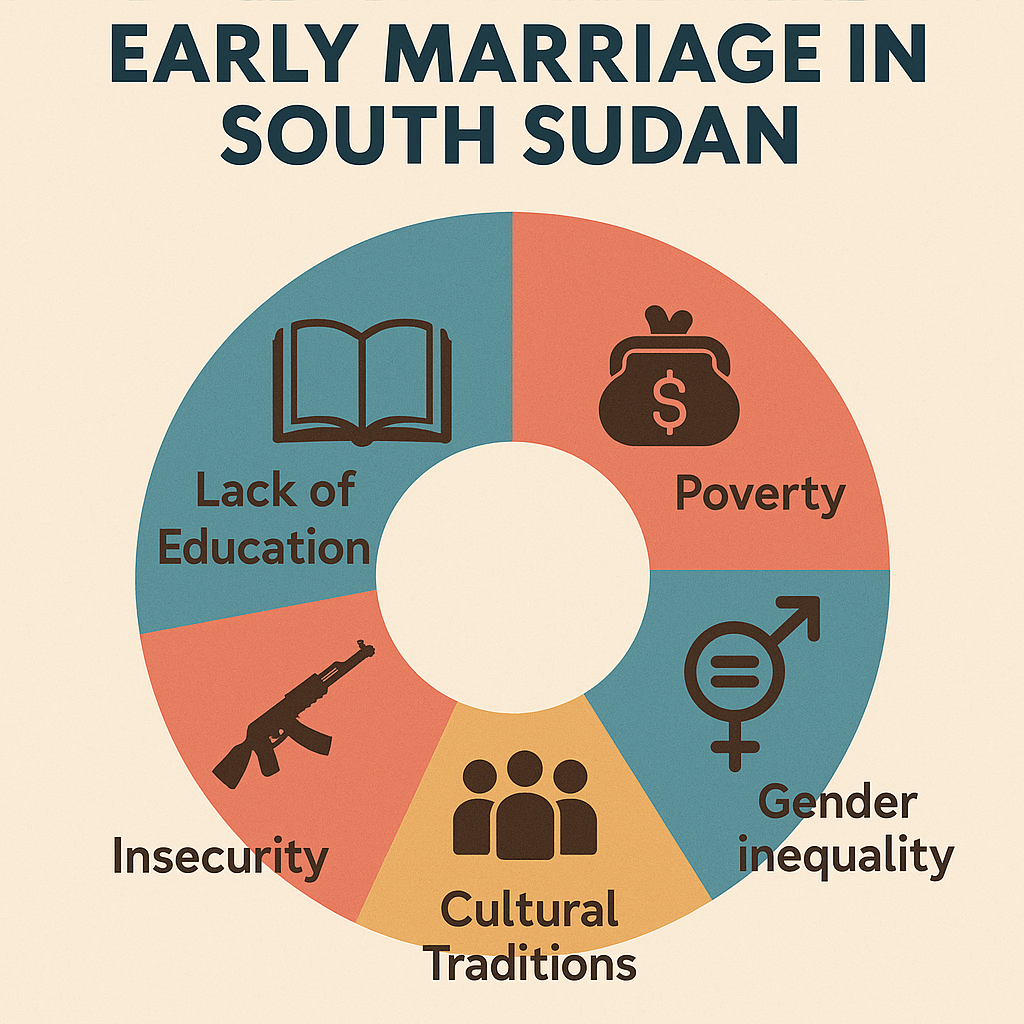
Early marriage in South Sudan is influenced by a complex interplay of cultural, economic, legal, and conflict related factors.
By Ernest Ogwaro.
1. Cultural and Traditional Practices
Early marriage is a deeply ingrained practice in many South Sudanese communities, where it is often viewed as a means of preserving family honor and controlling girls’ sexuality.
2. Bride Price System
The bride price system, where families receive cattle or money in exchange for their daughters, serves as a significant economic incentive for early marriage, particularly in impoverished households.
3. Poverty and Economic Hardship
Financial difficulties exacerbate the prevalence of early marriage, as families seek to alleviate economic burdens. The ongoing conflict and displacement have worsened poverty, rendering young girls increasingly vulnerable.
4. Limited Access to Education
Restricted access to education, particularly in rural and conflict-affected areas, results in high dropout rates, making girls more susceptible to early marriage.
5. Insecurity and Conflict
The pervasive violence and instability in South Sudan lead some families to believe that early marriage offers protection for girls. Gender-based violence and displacement further exacerbate the situation.
6. Weak Legal Enforcement
Although the legal age for marriage is 18 under South Sudan’s 2008 Child Act, weak enforcement and the influence of customary laws allow early marriages to persist.
Effective Strategies to Mitigate Early Marriage
1. Improved Access to Education
Providing scholarships, school meals, and safe learning environments can help mitigate early marriage. Investing in girl-friendly schools, particularly in rural and conflict-affected regions, is also crucial.
2. Community Awareness and Social Norm Change
Engaging community leaders, elders, and religious figures in raising awareness about the detrimental effects of early marriage can foster social norm change. Launching media campaigns in local languages can also challenge harmful traditions.
3. Economic Empowerment Programs
Supporting families through income-generating initiatives can reduce their dependency on bride price. Offering vocational training and life skills programs for adolescent girls can also empower them.
4. Strengthening Legal Frameworks
Enforcing existing child protection laws and closing gaps between customary and statutory systems can help eliminate early marriage. Training law enforcement, judiciary, and local authorities on child rights and gender equality is also essential.
5. Protection and Support Services
Establishing community-based child protection systems can provide critical support to girls at risk of or affected by early marriage. Offering counseling, legal aid, and shelters can also help protect them.
Roles of Government and Community
Government Responsibilities:
Enforcing the legal age of marriage and aligning customary practices with national laws can help prevent early marriage. Increasing investment in girls’ education and gender-responsive services is also crucial. Leading national efforts to eliminate child marriage through coordinated policies and campaigns can help galvanize change. Ensuring access to support services for vulnerable children and survivors is also essential.
Community Responsibilities:
Promoting behavioral change by involving traditional and religious leaders can foster a cultural shift. Establishing local watch groups to prevent and report early marriages can also help protect girls. Educating parents on the long-term benefits of delaying marriage and supporting girls’ education can help create a brighter future for girls in South Sudan.
Leave a Reply