
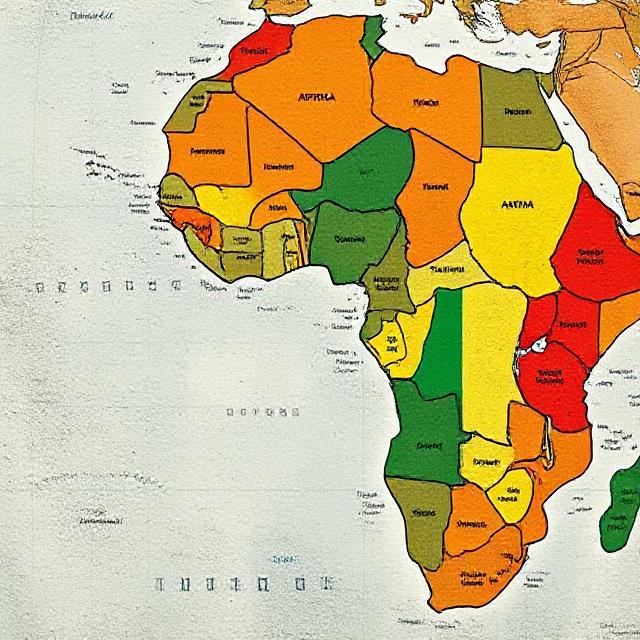
In recent years, African leaders have increasingly shifted their alliances from Western countries to China and Russia, seeking support in business, infrastructure, military training, and weaponry. China has taken the lead in infrastructure development, investing heavily in roads, bridges, and airports across the continent. Russia, on the other hand, has become a key partner in supplying ammunition and offering military training.
At first glance, these partnerships may seem like a strategic move toward development. However, from a broader perspective, Africa remains at a disadvantage. The continent has not yet gained true independence or freedom in its dealings. Instead, it appears to be transitioning from one form of colonial influence to another.
African raw materials are still being exported, mainly to China, where they are processed and then sold back to African markets at significantly higher prices. This mirrors the old colonial economic pattern, where Africa provides raw resources and buys back expensive finished goods.
Historically, if we revisit the roots of the Second World War, one of the key driving forces was the Industrial Revolution. European powers, in desperate need of raw materials to fuel their industries, turned to Africa and Asia. Unable to source these resources within Europe, they colonized other regions—particularly Africa—leading to exploitation and control over local economies.
Today, while colonial empires have officially ended, the core dynamics of exploitation remain. Africa’s wealth continues to benefit others more than its own people. Leaders, despite having more access to information and global platforms than ever before, still enter into agreements that do not prioritize long-term self-reliance or sustainable development.
In essence, African countries are not achieving genuine progress. Instead, they are falling into new traps — wrapped in debt, bound by unequal trade deals, and influenced by foreign powers with their own strategic interests.
For Africa to truly move forward, it must break this cycle. That means investing in local industries, processing its own raw materials, strengthening institutions, and creating policies that put African interests first. Without these changes, the continent will continue to serve as a resource base for others — not as a thriving, self-sufficient global player.
By Ernest Ogwaro
The leader of United Labour Party Of South Sudan.
Visit our website for more information
Leave a Reply